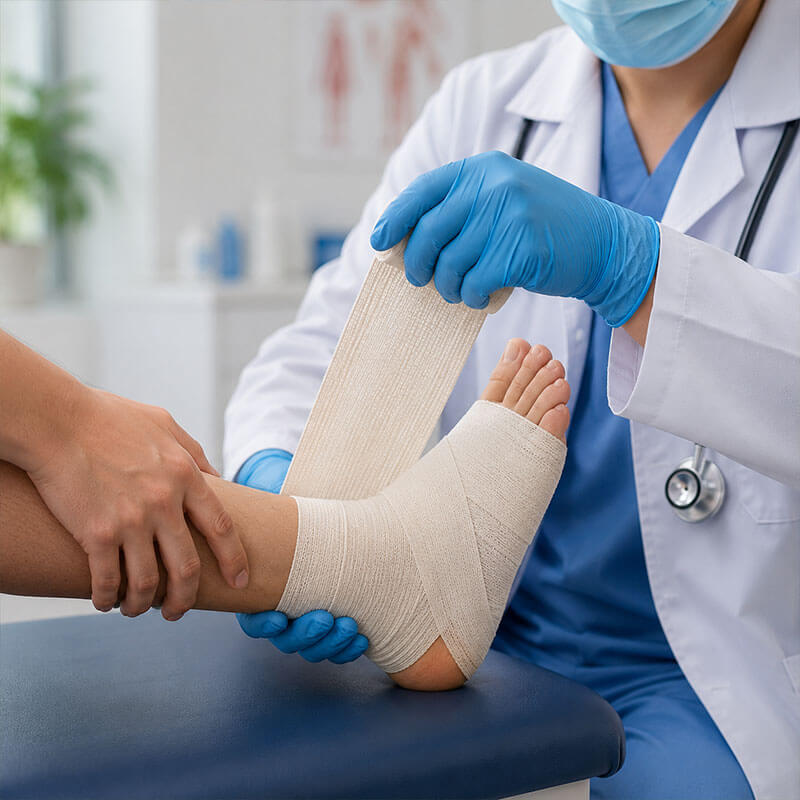
Fractures and traumatic injuries can affect bones, joints, ligaments, muscles, and other supporting tissues. Fracture & Trauma Care focuses on accurate diagnosis, timely treatment, and appropriate rehabilitation to help restore bone healing, movement, and function.
Fractures can vary in location, severity, and complexity. Treatment depends on the affected bone, type of injury, displacement, and overall health of the patient.
A suspected fracture or significant injury should be assessed promptly, particularly when there is severe pain, swelling, deformity, or difficulty moving the affected area. Early evaluation helps determine the extent of the injury and the most appropriate course of treatment.
Fracture diagnosis begins with a physical examination and assessment of the injury. Imaging such as X-rays is commonly used to identify fractures and understand their position. In more complex injuries, CT scans or other imaging may be recommended to provide additional information for treatment planning.
Treatment is selected according to the type, location, and severity of the fracture. Some fractures can heal with immobilization and monitoring, while displaced or complex fractures may require surgical treatment to restore proper alignment and stability.
Recovery depends on the type of fracture, treatment performed, patient's age, overall health, and healing progress. Rehabilitation may be recommended to restore strength, flexibility, balance, and function after the bone has sufficiently healed.
Prompt and appropriate treatment can play an important role in fracture healing and restoring mobility after an orthopaedic injury. Whether the injury is related to a fall, accident, sports, or another form of trauma, an orthopaedic evaluation can help determine the right treatment approach.
If you or someone you know has suffered a significant injury or suspected fracture, seek medical evaluation promptly. An experienced orthopaedic surgeon can assess the injury and recommend an individualized treatment and rehabilitation plan.
Whether you're experiencing joint pain, sports injuries, arthritis, or mobility issues, Dr. Abhi Vora provides advanced orthopaedic care with expertise in Robotic Joint Replacement, Arthroscopy, and Sports Injury Management.