Pediatric Orthopaedics in Ghatkopar focuses on the diagnosis and treatment of bone, joint, muscle, and movement-related conditions in infants, children, and adolescents. Because children's bones and bodies are still growing, orthopaedic care requires an approach that considers their age, growth, development, and individual needs.
Some orthopaedic conditions in children may develop gradually and may not always cause significant pain. Parents should consider an evaluation if they notice persistent changes in movement, posture, walking pattern, or limb alignment.
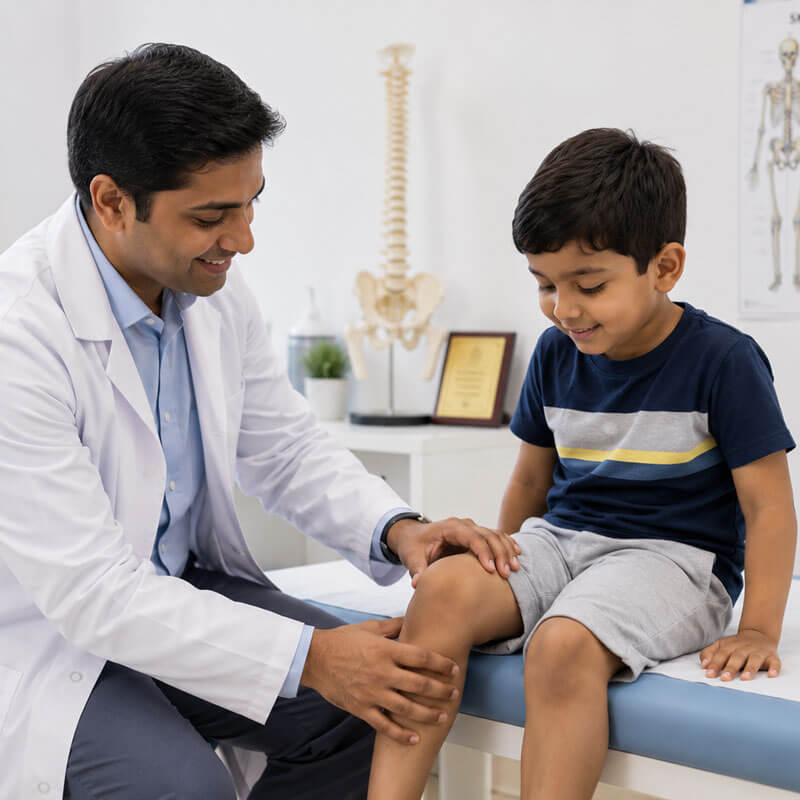
Evaluation begins with a detailed medical history and physical examination. The child's movement, posture, growth, joint function, and alignment may be assessed. Depending on the condition, imaging tests such as X-rays, ultrasound, or MRI may be recommended.
Treatment is tailored to the child's age, growth stage, condition, and severity of symptoms. Many pediatric orthopaedic conditions can be managed with observation, activity modification, physiotherapy, or supportive treatment, while certain conditions may require surgical intervention.
Early evaluation can help identify problems that may affect a child's movement, growth, or physical development. Appropriate treatment and regular monitoring can support healthy development and help children remain active as they grow.
Pediatric orthopaedic recovery often involves cooperation between the child, parents, surgeon, and physiotherapist. Following the recommended treatment plan and attending follow-up appointments can help monitor progress and ensure that treatment is adjusted as the child grows.
Orthopaedic problems can affect a child's comfort, confidence, and ability to participate in everyday activities. If you notice persistent pain, difficulty walking, unusual movement, or other concerns about your child's bones and joints, consult an orthopaedic specialist for an appropriate evaluation.
Whether you're experiencing joint pain, sports injuries, arthritis, or mobility issues, Dr. Abhi Vora provides advanced orthopaedic care with expertise in Robotic Joint Replacement, Arthroscopy, and Sports Injury Management.