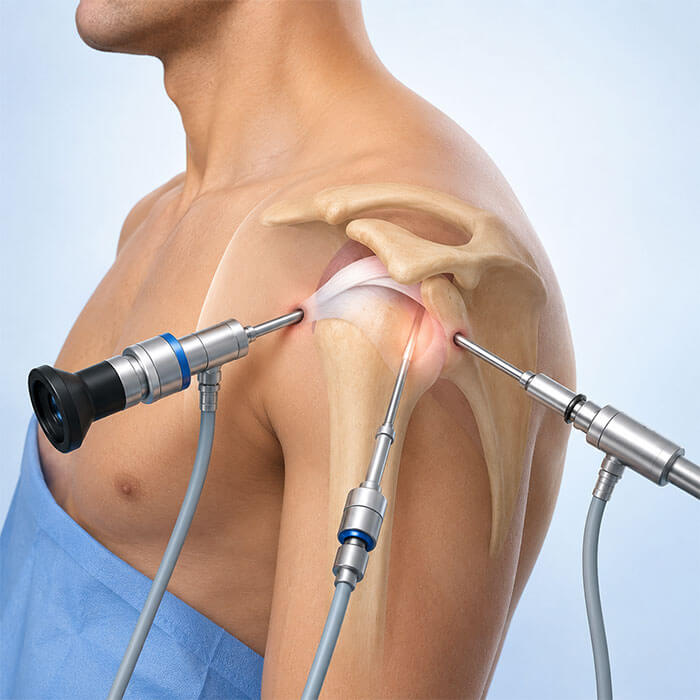
Shoulder Arthroscopy in Ghatkopar is a minimally invasive surgical procedure used to diagnose and treat various conditions affecting the shoulder joint. The procedure uses a small camera called an arthroscope, which allows the surgeon to examine the inside of the shoulder through small incisions and treat the affected area using specialized instruments.
Shoulder Arthroscopy in Ghatkopar may be recommended for patients experiencing persistent shoulder pain, weakness, stiffness, or instability. It can be used to treat several conditions involving the rotator cuff, labrum, cartilage, and other structures of the shoulder.
Shoulder Arthroscopy allows the surgeon to directly visualize the structures inside the joint and address specific problems through small incisions. The minimally invasive approach may help reduce tissue disruption compared with certain traditional open procedures.
During Shoulder Arthroscopy, the surgeon makes small incisions around the shoulder and inserts an arthroscope with a camera. The images are displayed on a monitor, allowing the surgeon to examine the joint in detail. Specialized instruments may then be used to repair or treat the damaged tissues according to the patient's condition.
Recovery following Shoulder Arthroscopy depends on the condition treated and the type of repair performed. Rehabilitation and physiotherapy are important parts of recovery and help restore shoulder strength, flexibility, and function. The recovery timeline varies from patient to patient.
Persistent shoulder pain, weakness, restricted movement, repeated dislocations, or difficulty performing everyday activities should be evaluated by an orthopaedic specialist. After a detailed assessment, your surgeon can determine the cause of your symptoms and recommend the most appropriate treatment.
Shoulder problems can affect work, sports, sleep, and everyday movements. If shoulder pain or instability is limiting your activities, consult an experienced orthopaedic surgeon to explore your treatment options and determine whether Shoulder Arthroscopy may be suitable for you.
Whether you're experiencing joint pain, sports injuries, arthritis, or mobility issues, Dr. Abhi Vora provides advanced orthopaedic care with expertise in Robotic Joint Replacement, Arthroscopy, and Sports Injury Management.